Window Film for the Windows That Are Hard to Cover: Showers, High Glass, and Specialty Shapes
Explore professional window tint for homes and businesses, from frosted shower-window privacy to solar control for high windows and specialty shapes.
Some windows are easy to dress. Others leave you wondering where a shade would even go.
There is the window inside the shower, where privacy matters but a conventional blind may be impractical. The high window that fills the living room with light—and puts glare across the television. Or the beautiful arched window that needs some sun control, but not necessarily the expense of a specialty-shaped treatment.
Window film gives you another option. At CS Custom Blinds, we provide residential and commercial window tinting, including solar-control and frosted privacy applications. The right film can help manage sunlight or obscure an unwanted view without adding a hanging treatment.
The important part is choosing the film for the problem you actually want to solve.
Window tint is not just about making glass darker
Architectural window film is designed for the flat glass in homes and buildings. It is a different product category from automotive tint, even when the manufacturer makes both.
Depending on the film, your priorities might include:
- Reducing harsh sunlight and glare.
- Managing solar heat through sun-facing glass.
- Filtering ultraviolet light.
- Adding a frosted privacy finish.
- Keeping the appearance of the window relatively natural.
Those goals do not all call for the same product. A nearly clear solar-control film, a reflective tint, and a frosted privacy film can produce very different results.
Frosted film for shower windows: privacy without a blind
A window in a shower can bring welcome daylight into the bathroom. Figuring out how to cover it is another matter. You may not want a blind in the splash zone, hardware attached around the opening, or a treatment that needs to be opened and closed.
Frosted film is worth considering because it changes visibility through the glass itself.
Translucent frosted film gives glass an etched appearance, obscuring the view while allowing natural light through. Unlike a blackout treatment, it is designed to diffuse light rather than eliminate it. The amount of light transmitted depends on the selected film and the existing glass.
For a shower window, however, we need to look beyond the word “privacy.” The location, glass surface, direct water exposure, and product installation requirements all matter. A film described as suitable for bathrooms is not automatically approved for every wet-side shower application.
We assess the window before recommending the product and placement. We also want you to understand the finished privacy level: frosted film blurs visibility, but it is not an opaque wall. Lighting, viewing distance, and how close someone stands to the glass can affect the appearance of shadows or silhouettes.
The goal is useful daylight and appropriate privacy—not an assumption based on a small sample.
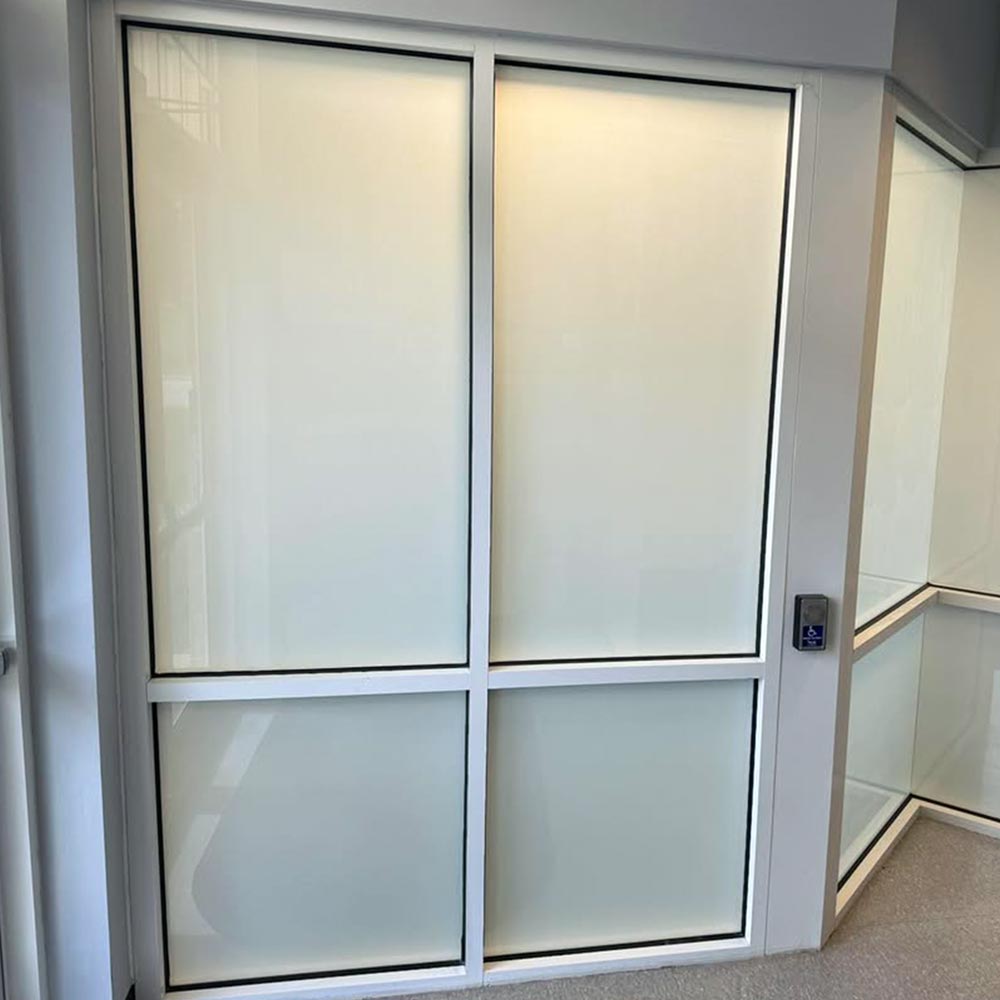
Product example: frosted interior glass lets daylight through while obscuring the view. This is not a shower installation.
High windows: soften the sunlight without a daily adjustment
High windows can be a beautiful part of a room, especially when they bring daylight above furniture or preserve an open view. They can also direct bright sun onto seating, work areas, or screens.
Film can be a practical option when you want ongoing solar control without an operating shade on that particular opening. Once installed, there is no daily raising or lowering.
There is a tradeoff: film stays at its selected light level. You cannot open it wider on a cloudy afternoon or close it further for a movie. If you need changing levels of light control or room darkening, a shade may still be the better choice—or a useful companion to the film.
High windows also require safe installation access. Height, surrounding obstacles, glass dimensions, and equipment needs belong in the estimate, rather than being treated as an afterthought.
Arches, angles, and specialty shapes: compare more than one solution
A specialty-shaped window does not always need a specialty-shaped blind.
Where the glass and film are compatible, film can be cut to fit an arch, triangle, or angled opening. That makes it worth comparing when your main concern is persistent glare or solar heat rather than adjustable coverage.
For some projects, tint can be a budget-conscious middle ground between leaving the glass untreated and ordering a custom-shaped window treatment. It is not automatically the less expensive option in every case. Film selection, access, preparation, size, and installation complexity all affect the quote.
The comparison should also account for what you receive. Film preserves the outline of the window without adding a fabric or slatted covering, but it does not offer the same adjustability, decorative effect, or room-darkening potential as every specialty treatment.
We can help you compare the approaches instead of assuming the most elaborate treatment is the only answer.
What window film specifications actually tell you
Manufacturer numbers are useful when you know what they measure. They are less useful when several different percentages are treated as if they mean the same thing.
Visible light transmission: how much light passes through?
Visible light transmission, or VLT, describes how much visible light passes through under the stated test conditions. Lower numbers generally mean a darker result.
Solar-control films come in a range of light levels, from lighter options that preserve more daylight to darker choices that reduce more visible light. A product's shade label is not a promise of the exact finished VLT of your window: the glass already has its own optical properties.
Total solar energy rejected: a broader solar-control measure
Total solar energy rejected, or TSER, is a broader measure of solar-energy rejection than an infrared-only percentage.
Compare the published TSER for the exact film being considered, along with the glazing test conditions. A maximum advertised for a product range is not necessarily the performance of every shade within it. We can explain the relevant specifications as part of your selection.
A TSER figure is also not a prediction of your energy-bill savings or how many degrees cooler a room will become.
Infrared rejection: useful, but not the whole heat story
An infrared-rejection percentage does not describe how much of all solar energy a film rejects. Infrared rejection and TSER describe different measurements. The test method and wavelength range matter when comparing products, so a single large percentage should not be the whole basis for your decision.
UV filtering: protection with realistic expectations
Selected professional solar-control films offer over 99% UV blocking, according to their manufacturer specifications. The exact figure depends on the product. Filtering UV can help reduce one contributor to fading, but visible light, heat, and the materials themselves also influence how furnishings age.
No film should be presented as a guarantee that furniture, flooring, or merchandise will never fade.
A natural look or a reflective finish?
Appearance is part of the decision, not just a detail at the end.
Low-reflectivity ceramic films can provide solar control without the mirror-like appearance of traditional reflective films. A lighter ceramic choice may offer only modest glare reduction, so it should not be mistaken for maximum glare control.
Dual-reflective films take a different approach: a more reflective exterior with lower interior reflectivity. That may suit a different set of priorities.
These film types are not interchangeable recommendations. We match the product to the glass, the appearance you prefer, and the problem you want to address.
Business windows: comfort, visibility, and privacy serve different needs
We also tint commercial properties. The right approach depends on how people use each part of the building.
- Offices: consider sunlight across desks and computer screens, not just the view from outside.
- Storefronts: balance solar control with how clearly customers can see displays and activity inside.
- Conference rooms and interior partitions: frosted film can obscure views where a blind would be awkward or visually distracting.
- Customer-facing spaces: consider both daytime conditions and the appearance after interior lights come on.
For leased premises, building-owner approval and exterior appearance requirements may also affect the selection.
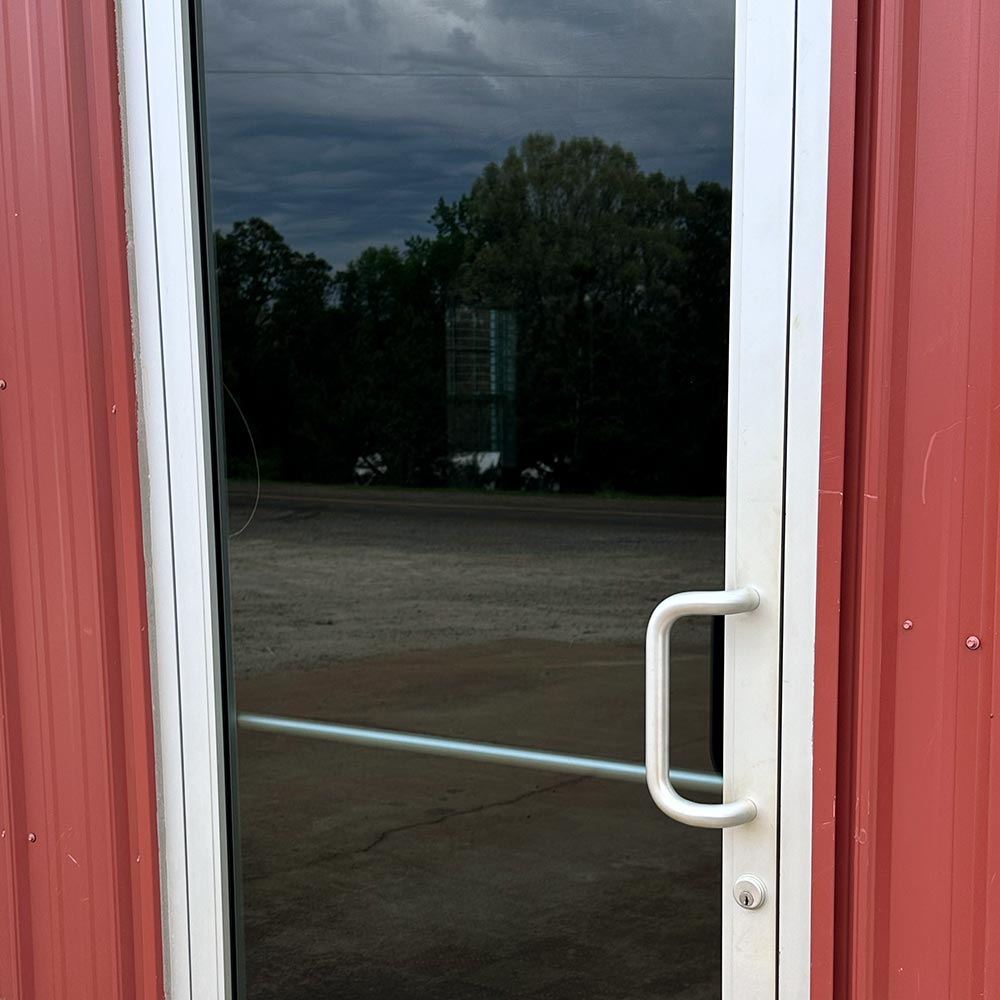
Product example: tinted entry glass with a darker exterior appearance. The right finish depends on your building and visibility goals.
Reflective tint is not reliable nighttime privacy
This is especially important for bathrooms, street-facing rooms, and offices used after dark.
Reflective privacy depends on the difference in brightness between the two sides of the glass. When it is brighter outside, the exterior reflection can make it harder to see in. When the interior is brighter at night, that privacy effect can diminish or reverse.
Do not choose a reflective tint on the assumption that it provides private viewing in both directions, day and night.
For a bathroom, we should discuss an appropriate frosted or opaque solution and its actual privacy characteristics. For a living area, film and an adjustable nighttime covering may work well together.
Glass compatibility comes before the shade selection
Not every film is suitable for every window.
Film selection requires checking the glass construction and the conditions around the opening. Double-pane units, Low-E coatings, existing tint, partial shading, and the condition of the glass can all affect the assessment.
Solar absorption can increase thermal stress in glass, making compatibility checks important. “Ceramic” does not mean safe for every window.
We also need to review applicable window-manufacturer restrictions and the written film warranty for the selected product. A manufacturer's general warranty headline is not a substitute for the terms that apply to your installation.
Start with the window that is giving you trouble
You do not have to choose between covering every window and living with the problem.
Perhaps you need privacy at a shower window, less glare from an upper arch, or a more comfortable workspace. Start there. We can look at the glass, discuss the result you want, and compare film with other treatments where that is useful.
Learn about our window tinting services, or request a free estimate. Tell us which windows concern you and whether your main priority is privacy, light, heat, or a combination. We will reach out to discuss the next step.